Daniel Kozlowski
22 Jun 2026
No Comments
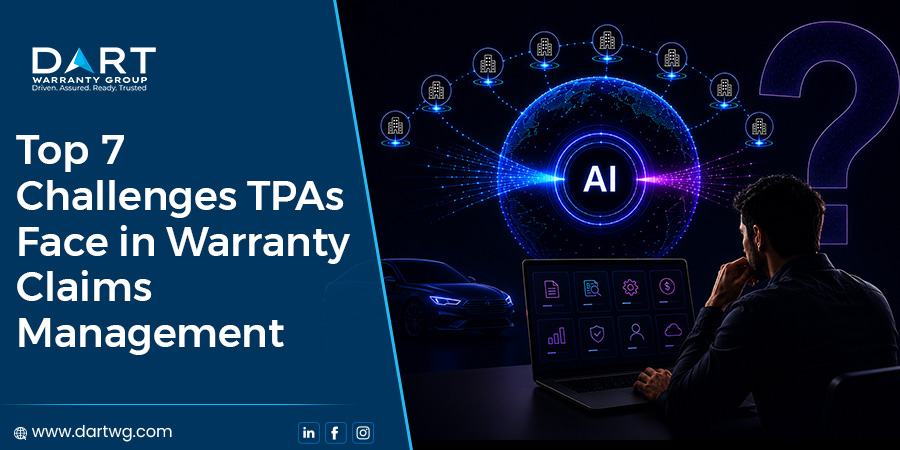
The process of managing warranty claims has undergone significant changes in recent years, particularly in the automotive industry and the Vehicle Service Contract (VSC). The TPA is not just handling the claims process anymore but is operating in an environment where there is heavy interaction between several players, such as the dealers, VSC, and F&I products, among others.
In the year 2026, the expectations on TPAs will be even higher as dealers need prompt authorizations while contract holders are expecting more transparency and obedience from the OEMs, who have to ensure strict adherence to regulations and report back in detail.
However, despite the pressure and the need for increased productivity, the operational environment is becoming increasingly complex due to an increasing number of VSC and F&I products. Due to this advancement, the conventional ways of doing business in this domain have proven to be ineffective, leading businesses to make investments in warranty claims software, claims automation, and artificial intelligence claims processing.
The following are seven common challenges facing TPAs in warranty claims management today. Let’s explore the details.
Challenge 1: Managing Growing Claim Volumes
One of the major challenges that TPAs need to deal with today is the number of claims being processed by them. As more companies come up with VSC packages, warranty extensions, and F&I products, TPAs have to deal with thousands and sometimes even tens of thousands of claims per month.
Key Issues:
- Delay in processing: As the number of claims increases, the manual process takes longer to complete. The claims stay in the queue, waiting for verification, hence delaying the authorization process and disrupting dealer operations.
- Overload of administrative duties: The claims department wastes most of its time performing redundant functions like data entry and eligibility checks. This makes it hard for them to engage in value-added activities.
- Delayed authorizations: Manual processes involve passing the claims through different levels before getting authorized. This makes the authorization process longer.
- Increased cost of operation: With manual operations, it is costly to scale up since more people need to be employed to manage them.
Why It Matters?
High claim volumes are not just an operational challenge; they directly influence dealer satisfaction, customer retention, and financial performance.
The Shift
Modern warranty claim management software enables organizations to automate claims handling, reducing bottlenecks and improving efficiency without increasing headcount.
Challenge 2: Complex Vehicle Service Contract (VSC) Validation
Contract validation is at the center of warranty claims processing, and it has become increasingly complex. Moreover, modern VSC agreements are no longer simple coverage documents. They include layered structures with multiple variables that must be evaluated for every claim.
Key Validation Components:
Terms of Coverage: Every contract has terms defining certain parts and circumstances under which a claim will be covered. Mistaken interpretations may result in incorrect claim approval or rejection.
- Deductible provisions: Deductible provisions differ from one contract to another and should be interpreted correctly to prevent misunderstandings with the dealer or clients.
- Waiting periods: Many times, waiting periods are provided in contracts for coverage. It is necessary to reject any claims made within this period.
- Mileage restrictions: Sometimes, there are mileage limits in the contract. Errors in the calculation of mileage may lead to financial loss.
- Conditions and exclusions: Each contract will provide exclusion details that need proper understanding and interpretation.
Impact on Operations
Validation of such parameters manually is cumbersome and inconsistent. Even the most seasoned claims adjuster may find the process difficult due to the complexity of contractual combinations involved.
The Shift
Warranty claims software that uses rule engines and AI claims processing will automate the process of contract validation.
Challenge 3: Fraudulent and Duplicate Claims
Fraud has been one of the biggest threats as far as warranty claim management and financial risks in the USA operations are concerned. As compared to clear fraud, several cases are very subtle and difficult to identify unless there is a thorough and sophisticated analysis.
Cases of Warranty Claim Fraud:
- Claim duplications: There have been cases of the same repair being claimed more than once across several claims. This can only be detected through data management software.
- Labor charge inflation: There might have been exaggeration on the part of repair shops on the number of hours put into a specific repair job.
- Repairs not authorized by contracts: There are claims where repairs made did not meet the terms of the agreement, and hence the claim needs to be paid unnecessarily.
- Altering the vehicle’s miles: There has been fraudulent alteration of a vehicle’s mileage so that an invalid claim can be made to look like a legitimate one.
Effects of Fraud in Warranty Claims Management: This will lead to losses due to its effects on profitability.
The Shift
Automated systems that are used nowadays to handle claims using artificial intelligence use pattern recognition and anomaly detection to find any potential fraudulent transactions as early as possible to minimize fraud risks.
Challenge 4: Dealer Communication Bottlenecks
Effective communication between TPAs and dealers plays a very important role in efficient claims handling. Still, it often remains one of the most widespread problems.
Key Communication Challenges:
- Phone-based coordination: Many TPAs still rely heavily on phone calls for claim approvals and updates, which slows down processes and increases workload.
- Email dependency: Documentation is often shared via email, leading to delays, lost attachments, and fragmented communication.
- Incomplete documentation: Claims are frequently delayed due to missing repair details, invoices, or technician notes.
- Frequent status inquiries: Dealers regularly follow up for updates, increasing operational burden on TPA teams.
For example, the claim may just be left inactive for some days due to non-submission or verification of documents needed.
Operational Impact
Inefficient communication means delays in repairs, dissatisfied dealerships, and higher costs of operation.
The Shift
Dealership portals incorporated in the system used for handling claims allow for instant messaging, document submission, and updates, making manual communication unnecessary.
Challenge 5: Limited Operational Visibility
Lack of real-time visibility is a critical issue for many TPAs. Real-time visibility remains a significant challenge as it restricts them from monitoring the claim status, their financial risks, and overall performance. Using warranty claim software and claims automation tools helps ensure real-time visibility and enables better decision-making.
Common Visibility Gaps:
- Status monitoring for claims: Without central monitoring systems, it becomes harder to monitor claim statuses.
- Financial risk assessment: TPAs do not have a real understanding of their overall claim exposure.
- Performance evaluation for dealers: Efficient claim analysis needs access to timely information, which isn’t always available.
- Monitoring adjuster productivity: Performance evaluation becomes hard without effective tools for analyzing adjuster performance.
Operational Impact
Decision-making becomes reactive and not proactive without visibility, meaning that problems like defective trends and spikes in claims will not be seen until they become worse.
The Shift
Current claims management software in Chicago, as well as enterprise applications, are equipped with dashboards that provide real-time information.
Challenge 6: Disconnected Systems and Integration Issues
TPAs usually work in an environment where technologies are not integrated with each other; they run independently without being connected. The inability to integrate results in siloed data, data duplication, and inconsistency in the processes. In view of this, the implementation of claim automation is indispensable.
Systems Involved:
- Dealer Management Systems (DMS)
- CRM platforms
- Accounting software
- Inspection tools
- Payment systems
Key Issues:
- Manual Data Entry: The data needs to be entered several times into different systems, making errors more likely.
- Data Inconsistencies: Failure to coordinate causes inconsistency in the data and delays in the process.
- Efficiency Issues: Diverse systems complicate processes and reduce efficiency.
Impact on Operations
Inability to integrate affects efficiency, raises costs, and makes scalability impossible.
The Shift
The use of integrated automobile warranty management software in America makes use of API connections to link systems seamlessly, increasing efficiency.
Challenge 7: Regulatory Compliance and Audit Requirements
Compliance is an important element in the process of warranty claims management, particularly in regulated environments such as the U.S.
Main Compliance Issues:
- State-based legislation: Each state has different regulations on the process of administering warranties.
- Disclosures to consumers: Third-party administrators are required to properly disclose all relevant contract provisions.
- Audit Trail Management: Each claim must be completely tracked through the audit trail process.
- Financial and Reinsurance Reporting: Reporting is an important requirement and must be done accurately.
AI-Enabled Automotive Warranty Software Built for Modern Businesses
Discover More →Effects of Manual Compliance Management
There are higher chances of non-compliance, leading to audit failure, penalties, and costly mistakes.
The Shift
The latest warranty claims management systems come integrated with compliance rules and processes.
Why These Challenges Are More Complex for VSC & F&I Administrators?
For companies that deal with warranty claims management, the level of complication is even higher when they are managing claims for Vehicle Service Contracts (VSCs) and F&I products, as both of these products have their own requirements for processing, which need advanced software.
Vehicle service contracts require management of the following:
Variation in coverage tiers and coverage options: The presence of various levels of coverage, each offering a distinct inclusion set, complicates the task of validating claim eligibility; AI claims processing becomes a necessity.
Eligibility criteria based on mileage: Mileage requirements need to be considered, necessitating automated claims processing for error-free operations.
Different deductibles: Various deductibles under differing contracts have been observed, making the calculation process more complicated and requiring automated claims processing software.
Activation period: Claims filed outside activation periods need to be automatically screened out through the use of claims automation technology.
Cancellation guidelines: Cancellations and prorations of contract claims increase the complexities of claim management software.
F&I products include the following:
GAP coverage: Requires financial calculations based on loan balances and vehicle value, best managed through AI claims processing systems.
Tire & wheel protection: Claims depend on damage type and coverage conditions, making automated claims processing critical for faster validation.
Key replacement programs: Verification of ownership and coverage limits requires accurate tracking through warranty claim management software.
Road hazard coverage: External damage validation needs supporting evidence, which can be streamlined using claims automation tools.
Maintenance plans: Claims must align with service schedules and limits, requiring integrated workflows in auto warranty management software in the USA.
Every product has unique claim workflows, validation requirements, and documentation standards.
Result
This multi-product environment creates significant administrative complexity, making claims automation and structured workflows essential.
How Modern Warranty Platforms Help?
Today’s platforms offer an integrated solution for handling these issues through automation, analytics, and integration. Rather than approaching claim management in a piecemeal manner, modern platforms have changed the process to be a well-oiled machine that relies on the power of data.
The following features are revolutionizing warranty claim management in the USA:
Automated Claims Intake and Routing
Automation of the intake process makes it unnecessary to manually enter information since the details of each claim are entered automatically from data submitted by dealerships, documentation, or other integrated systems. Claims are then automatically sent to the right workflow according to set rules such as type of claim, insurance coverage, or urgency.
For instance, an expensive engine repair claim is automatically referred to a senior adjuster, whereas other claims are immediately processed. Companies using claim automation have been able to reduce claim handling time by as much as 60-70%.
AI-Assisted Adjudication
AI-assisted adjudication helps adjusters make recommendations by studying claim information, patterns from the past, and contractual requirements. Rather than having to go through all the paperwork manually, adjusters get smart recommendations for approving, denying, or investigating more claims.
For example, if labor hours in any particular claim are higher than historical figures, the system automatically identifies such claims. The use of automated claim processing not only saves time but also increases accuracy and consistency when deciding on various claims.
Dealer Self-Service Portals
Through the use of a dealer portal, it becomes easy to create a one-stop shop where claims submissions, uploading of documents, and claim tracking are made possible. This makes it easier to do away with all the phone calls and emails.
In fact, rather than spending hours on phone calls awaiting approvals, dealers are able to upload invoices and get information instantly. For firms that have adopted the use of dealer portals, there has been a reported decrease in delays by 30-40%.
Agreement and Contract Management
Today’s warranty claims software features powerful agreement management tools to support the automatic validation of claims based on the terms of the agreement.
For instance, upon receiving a claim, the system automatically validates whether the warranty was valid or not by checking the eligibility of the warranty, deductible, miles driven, and exceptions. This process helps to save time and avoid any mistakes, especially in large organizations where the process might be cut down by at least 50%.
Real-Time Analytics and Reporting
Dashboards allow TPAs immediate insight regarding claims volumes, approvals, exposure, and operational efficiency.
For instance, if one particular part of the vehicle suddenly becomes involved in numerous claims, the analysis reveals the situation instantly, allowing the TPA to act proactively rather than reactively a few weeks later. The organizations in Chicago using claims management systems indicate a significant increase in operational decision-making efficiency, ranging between 20 and 30 percent.
System Integrations
Platform integration is one of the primary capabilities that modern platforms possess. Integration allows for interaction with systems such as DMS, CRM, accounting systems, inspection solutions, and payments platforms using APIs.
This indicates that information like repairs received from the DMS of dealers is used to fill out claim forms automatically, whereas approval for payments is synchronized with the accounting system. Integration with auto warranty management software in the USA settings can help improve the general efficiency of the process by up to 40%.
Software solutions such as extended warranty software in Chicago and warranty claim management software in general are helping TPAs to shift from entirely manual processes to automated intelligent workflows. The combination of claim automation and AI-driven claim handling, along with other integrations, is providing organizations with increased efficiency and improved experience in terms of claim processes.
Final Words
The involvement of TPAs in the management of warranty claims is becoming more complex. With high volumes of claims, complex contractual agreements, dangers of fraudulent claims, communication barriers, and regulatory pressures, the management of operations is changing.
It is not possible for traditional methods of claim management to cope with these factors anymore. However, the use of software for claims management, the implementation of automation in claims management, and the use of artificial intelligence in claims management could help TPAs handle operations more efficiently.
This means that in the future, warranty management will transform into intelligent claims management rather than just claims management.
Also Read: How AI Is Transforming Warranty Management in 2026?
Frequently Asked Questions (FAQs)
1. What is warranty claim software?
Warranty claim software is a digital tool that assists businesses in managing the entire warranty claim lifecycle, encompassing claim submission, validation, approval, reimbursement, and reporting. Today’s warranty claim software automates the repetitive tasks, interfaces with dealer and OEM systems, and uses artificial intelligence to improve processing accuracy and efficiency.
2. How can claims automation aid in warranty claims processing?
Claims automation removes all human activity in the collection, validation, and processing of claims data. By employing technologies such as optical character recognition (OCR), machine learning, and workflow automation, organizations can streamline claims processing and reduce errors, save time, enhance efficiency, boost customer satisfaction, and cut costs.
3. Why is AI claims processing beneficial for TPAs?
AI can help TPAs process high volumes of claims in an effective manner. AI technology can be used to extract information from invoices, analyze fraud claims, detect compliance issues, and generate recommendations regarding claim outcomes using historical data.
4. In what ways could warranty claim management software contribute to compliance?
The role of warranty claim management software in ensuring compliance is to integrate regulatory requirements into the claim management processes. It will be important for organizations involved in warranty claim management in the USA market since the regulations differ in different states.
5. What to consider in warranty claim management software?
Organizations need to consider some factors when selecting the best warranty claim management software, including claim intake, automated document processing, artificial intelligence, fraud detection, compliance management, real-time analytics, and customer communications.
6. Why are TPAs using AI-based warranty claim software?
The reason for TPAs using AI-based warranty claim software is because of the cost savings, faster claim processing, prevention of claim leakage, and improved customer experience associated with the technology. Given the increasing complexity and volume of claims, it makes sense for TPAs to utilize claims automation through artificial intelligence.
Leave a Reply
Recent Posts




Daniel Kozlowski
Designation: Co-Founder
With over 30 years of experience in the extended warranty and service contract industry, I help businesses modernize warranty operations and optimize claims management processes. As the founder of DRK Resources Tech LLC, I share insights focused on warranty management, service contract solutions, and automotive technology trends.