Daniel Kozlowski
16 Oct 2026
No Comments
Think of the most recent experience of waiting on a warranty claim. It could be anything from a washing machine to a car part to a smartphone. You filled out some paperwork, attached some pictures, and that is it; no response. Days have gone by, and finally, when you call them, you have to repeat everything to them.
However, let’s take a look from the opposite side. Your support team tries its best, but there is still a lot of work to do. First of all, your claim is in one system, the contract in another, and repair details somewhere else.
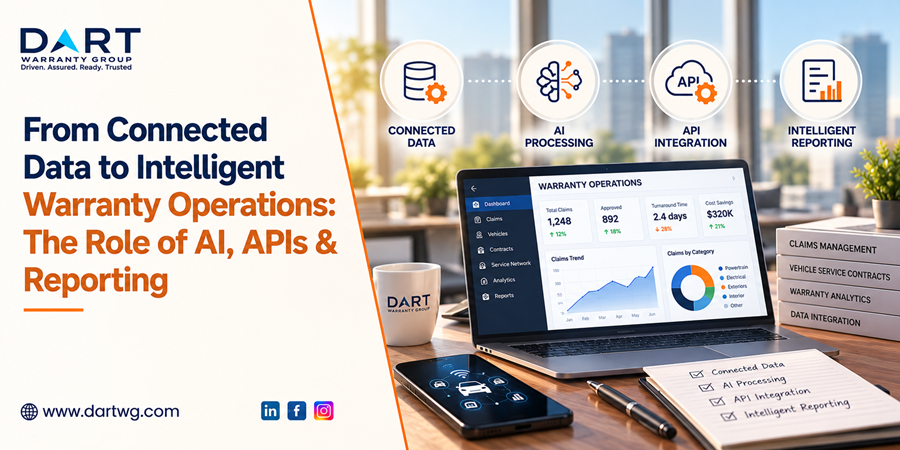
But do not worry; this can be easily addressed! With your data connected and AI doing the job, AI-powered warranty operations will help your claim process go smoothly, fast, and hassle-free.
This is what we will cover in the guide below. Let’s take a look:
Why Warranty Data Is Still the Most Unutilized Asset You Own
Every warranty claim is a story of what failed, when and where, what was done to fix it, and what it cost. Do this a few thousand times each year, and you have a treasure trove of information. The only problem is that much of this information is spread out among places that will never talk to one another. This is the problem that artificial intelligence technology is designed to solve.
The Hidden Cost of Disconnected Systems
The claims information is stored in one system, the contract information in another system, the repair network information in another system, and the customer communication is stored in the email inbox. There is manual key-entry of information, chasing missing documents, and reconciliation of differences. The result is slow settlement and frustrated customers.
What Connected Data Actually Looks Like
Connectivity of data is not a single system that will replace all other systems. It is a common layer that will allow for reading contract terms, claim history, repair costs, part availability, and interactions with customers. If that layer is created, then anything else automation, analytics, and AI has solid ground to work with. And that layer is built using APIs.
APIs: The Connective Tissue Behind Smarter Warranty Workflows
If data is the fuel, APIs are the pipes. Your claims system, CRM, dealer portal, payment gateway, and repair network can pass data back and forth without any exports of files or rekeying of fields. When looking to develop Custom AI Solutions for US business, an API framework tends to be the very first place to start, and a crucial one, as no matter how sophisticated the model, it will not work without the right data feed.
Integrations That Make the Biggest Difference
- Policy and Contract Platforms: So each claim is verified against the coverage conditions.
- Dealer and Service Center Websites: So repair status information is reported back without making phone calls.
- Inventory Platforms: So staff will be able to find out whether a particular repair is feasible or not.
- Payment Platforms: So approved claims will be processed for payment faster.
Why Real-Time Matters
Decisions get made based on yesterday’s information when batch upload and overnight synchronization take place. With an API-powered, real-time transaction, the claim status will change immediately when the technician records the repair, and even the client will see it. The transparency alone helps reduce inbound calls and foster trust. Now that the plumbing is sorted out, let us inject intelligence.
How AI Warranty Claims Processing Actually Works?
Now here comes the fun part. In just seconds, AI Warranty Claims Processing takes all those mundane and rule-laden processes that your team spends their day doing and automates them, giving them the time to concentrate on the difficult claims.
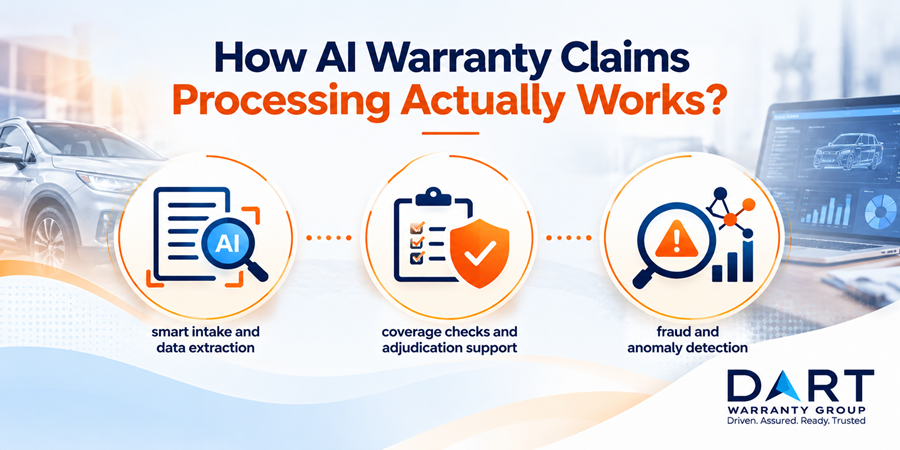
Smart Intake and Data Extraction
The software can read the claim forms, invoices, emails, and even photos to extract the necessary information such as serial numbers, failure descriptions, and date of failure. There will be no need to decipher information in the scanned PDF documents or chase after missing information anymore.
Coverage Checks and Adjudication Support
After structuring the claim, AI matches it against the terms of the contract, exclusions, deductibles, and claim history. Claims that are straightforward can be automatically approved by the system, whereas claims that fall into the gray area will be forwarded to an adjuster with an explanation as to why.
Fraud and Anomaly Detection
People are good at judging things but bad at finding any pattern within large amounts of data. AI will be able to recognize repetitive claims based on the same serial number, unusual repair costs in a certain area, or a service center with a claim history different from others. This is an important signal that should be checked, and it appears right away.
Warranty Claims Automation for US Providers: Where to Start?
The temptation is to automate everything right away. Do not do that. Warranty claims automation for US providers works best if it starts with high volume and low complexity and builds from there.
Begin with the Mundane and Repetitive Tasks
Document verification, status updating, eligibility checking, and approval tasks make a good start. They are predictable and measurable, and their outcome is visible right away.
AI-Enabled Automotive Warranty Software Built for Modern Businesses
Discover More →Leave Humans in the Loop
A good automation does not eliminate the human but empowers him/her. Define confidence levels to ensure that the system only automatically approves tasks that it is confident about. Make each automated task traceable. People like to know how something was done.
Measure as You Go
Record cycle times, first touch resolutions, and the percentage of claims processed without human intervention. This will guide you as to which processes to automate and will demonstrate value to leadership. That is, reporting.
Reporting That Turns Operations Into Decisions
Automated solutions produce a wonderful unintended consequence – accurate, precise, time-stamped data on all of your business activities. If you have the right reporting platform in place, AI Warranty Solutions in USA will be all about prediction as much as productivity.
The Metrics Worth Watching
- Claim cycle time, from submission to settlement
- Rates of approval or denial, by product type, region, and service partner
- Cost of processing the claim, cost of repairs
- Rate of repeat failures, for component or model
- Customer satisfaction at claim close
From Looking Back to Looking Ahead
Conventional reports show you what was going on in the last quarter. The predictive report shows what will be going on in the future; how a certain batch of goods is going to generate a rise in claims, where there will be an increased demand for repair capacity, and how the reserves should be modified. All of the above is provided to the production, product, and financial departments, and warranty turns into a quality tool.
Build, Buy or Partner? Choosing the Right Path
Standard tools can address routine issues, but warranty processes are not routine at all. Each organization has its own contract frameworks, partnerships, and old systems. That is why so many organizations use AI development services in USA to build custom solutions based on their workflows rather than adapting their workflows to a particular tool.
What to Look for in a Technology Partner?
- Experience in insurance, warranties, or service contract processes
- Ability to integrate via an API into your current technology stack
- Explainable AI instead of a black box
- Security and compliance that aligns with US data and privacy requirements
- Value-based phased delivery
Practical Guide to Getting Started This Quarter
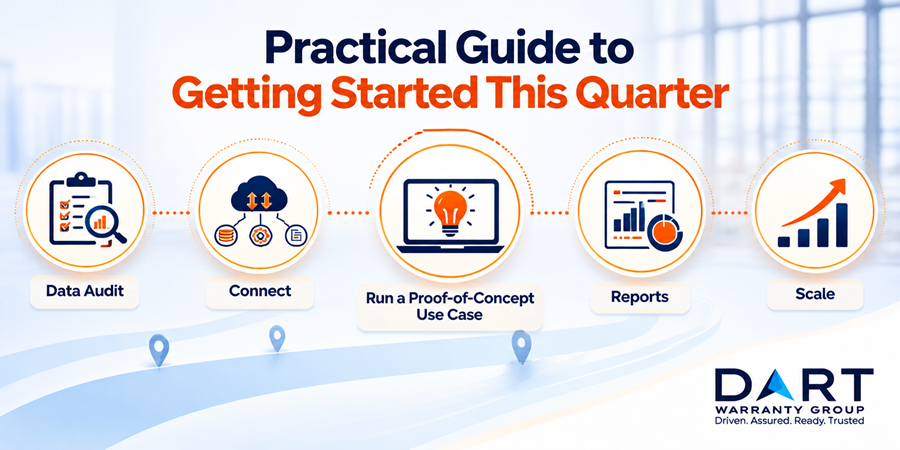
- Data audit: Determine which systems hold claim, contract, and customer data today.
- Connect: Build APIs that link your top two or three systems.
- Run a proof-of-concept use case: For example, streamline claims intake and validation in one product line.
- Reports: Create dashboards that demonstrate how much of an effect the proof-of-concept had on the metrics.
- Scale: Work on fraud detection, predictive analytics, and more complex claims.
Visible successes create impetus that makes the following action easy to fund and implement.
Final Takeaway
The progression from connected data to smart warranty operations is not one single giant step but a sequence of sensible actions: Connect your systems through APIs; leverage AI for all the mundane tasks; and rely on reporting for insight into what’s coming next. Providers who are prepared to embrace AI-driven warranty operations today will settle their claims faster, discover problems earlier, and provide a memorable experience. The technology is already available. The only issue is which workflow do you want to improve first?
Also Read: How AI Is Transforming Warranty Management in 2026?
Frequently Asked Questions
1. What is the application of AI for warranty management?
The AI-powered solution for warranty management provides the ability to automate the intake of claims, coverage analysis, fraud detection, and reporting through machine learning, automation, and connectivity. It enables quicker and more consistent decision-making without heavy manual work.
2. What does AI do in processing warranty claims?
The AI-based tool collects data from claims forms, invoices, and pictures; checks claims against the terms specified in the contract; identifies fraudulent behavior; and routes complicated claims to adjusters. It helps reduce the cycle time, minimize errors, and rework.
3. Why are APIs needed for automated warranty management?
With the help of APIs, you can connect the systems dealing with claims, policies, dealers, parts, and payments and share data in real time. Otherwise, the AI will not be able to receive the necessary data, and manual copy-pasting will become inevitable.
4. Is it feasible to introduce AI technology for small to medium-sized warranty companies in the US?
Yes. It is possible to start with one area of application, such as automatic processing of claims, and work within the budget while getting tangible results. Then, a custom solution can be expanded gradually.
5. What characteristics should my AI development partner possess in the USA?
My ideal partner should have experience in warranty/insurance, good integration abilities, explainable AI, high security and compliance, and a phased approach.
Leave a Reply
Recent Posts





Daniel Kozlowski
Designation: Co-Founder
With over 30 years of experience in the extended warranty and service contract industry, I help businesses modernize warranty operations and optimize claims management processes. As the founder of DRK Resources Tech LLC, I share insights focused on warranty management, service contract solutions, and automotive technology trends.