Daniel Kozlowski
18 Sep 2026
No Comments
The first thing most warranty providers that offer service plans and warranties will have figured out by now is that their claims process is a hiccup, but they cannot figure out why. They will purchase new software and automate some processes with it, expecting the issue to be solved.
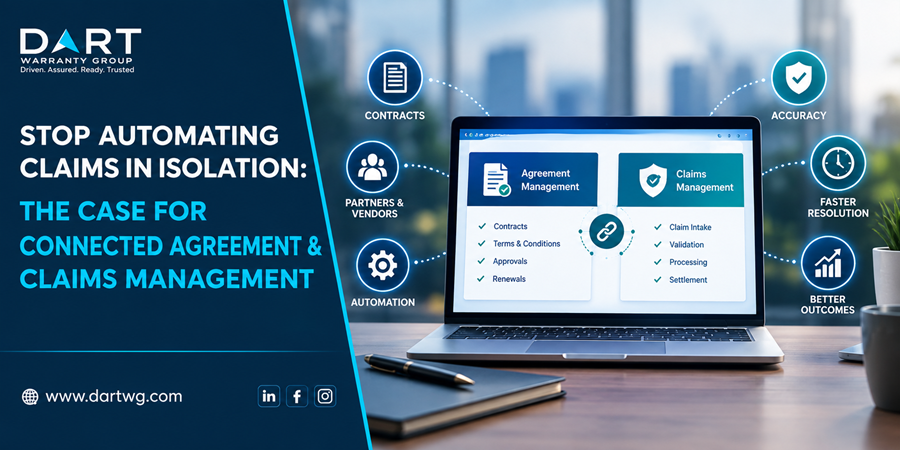
However, warranty claim management will not be failing because of a lack of the tool itself. The problem is in the fact that one database keeps the claims information and another one keeps the agreement details. The two databases do not communicate, and it is an important issue to investigate.
The Problem with Isolated Claims Automation
The default reaction when choosing to automate claims processing is typically addressing the issues at the claims desk level, where intake forms are scanned, approvals are made faster, and even a chatbot takes care of the preliminary customer questioning. On the face of it, everything is moving forward, but the terms of the contract, the limitations, and other relevant information about it are stored in a different document database somewhere far away.
That’s when the selection of the right warranty claim software for processing starts to play its role. Any solution that processes the claim cycle from the beginning to the end (claim intake, claim assessment and review, claim approval, and compensation issuance) without linking to the actual contract that creates all those obligations is addressing just half of the problem. Adjusters will have to check the actual policy documents anyway.
Why Agreements and Claims Can’t Live Apart?
The Disconnect Between Contracts and Claims
A claim is, at its core, a request to enact something that was promised in a contract. Yet in most organizations, the team that manages the agreement management system has almost no visibility into how claims against those agreements actually perform. Contract terms are drafted once and then treated as static, while claims data the thing that actually reveals whether those terms are working flows somewhere else entirely.
What Gets Lost When Systems Don’t Talk
This separation creates blind spots that are expensive in ways companies don’t always notice right away. A poorly structured clause might be generating disputes for months before anyone connects it to a spike in claim rejections. Choosing agreement management software in USA operations that can share data directly with the claims platform closes that gap and turns contract language into something measurable rather than something filed away and forgotten.
The Rise of AI in Claims Management
AI Claims Automation in the USA
The area of AI claims automation in USA businesses has been gaining significant popularity within the last two years or so, mostly because now the amount of claim data makes the use of machine learning technology truly helpful and not just fashionable. The patterns found in hundreds of previously filed claims can help identify any potential fraud, estimate processing time, and instantly approve routine cases.
Smarter Decisioning, Faster Resolutions
The bigger shift with AI claims automation in USA deployments is not speed alone; it’s the quality of the decision. When an AI model has access to both the claim details and the original agreement terms, it can make a judgment call that’s actually grounded in the contract, rather than a generic rule that ignores the specifics of what was promised to that particular customer.
Also Read: The Hidden Cost of Disconnecting Agreements from Claims
Auto Warranty Claims: A Case Study in Complexity
None demonstrates this more than the auto industry. Auto warranty claims management requires that all vehicle history, dealer contracts, part prices, and labor costs be taken into account, sometimes simultaneously for several different vendors or regions. One claim could involve three or four separate contracts.
Connecting Dealer Agreements to Claims
When auto warranty claim management software is built to pull directly from the dealer or manufacturer agreement, approvals happen faster because the system already knows what’s covered, what the reimbursement rate is, and which exclusions apply. Nobody has to dig through a PDF to confirm eligibility.
Reducing Fraud and Leakage
Disconnected systems are also where warranty fraud tends to hide. Solid auto warranty claim management software paired with real agreement data makes it far easier to spot claims that don’t match the coverage terms, catching leakage before it becomes a recurring cost line that finance has to explain every quarter.
What Connected Warranty Claim Management Looks Like?
When done properly, warranty claim management stops being a back-office function and becomes something closer to a feedback loop. Claims data informs how future agreements are drafted, and agreement terms shape how claims get evaluated in real time, rather than the two processes existing on separate timelines.
End-to-End Visibility
Good warranty claim software gives every stakeholder legal, operations, finance, and customer service the same view of a claim’s status and the contract behind it. That shared visibility cuts down on the back-and-forth emails and status-check calls that eat up so much of an adjuster’s day.
Real-Time Data Sharing
The practical payoff of connected systems is that teams can finally automate claims processing without constantly pausing for manual verification. When the claims engine and the agreement database share the same source of truth, approvals that used to take days can genuinely happen in minutes.
AI-Enabled Automotive Warranty Software Built for Modern Businesses
Discover More →Building the Right Agreement Management Software in USA
Not every platform marketed as agreement management software in USA companies use is actually built to integrate with claims. Some are little more than digital filing cabinets useful for storage and e-signatures, but not designed to expose contract data to downstream systems in any structured way.
Centralizing Contract Terms
The organizations getting the most value are the ones treating their agreement management system as a live data source rather than a document archive. Coverage limits, renewal dates, and exclusion clauses need to be stored as structured fields, not buried in free text, so claims automation can actually read and act on them.
Regional Considerations: Warranty Management in Chicago and Beyond
Geography still matters here more than people expect. A warranty management system in a Chicago operation, for example, has to account for state-specific consumer protection rules, local dealer networks, and regional service partner details that a one-size-fits-all national platform can easily miss if it is not configured with local specifics in mind.
Warranty Management Software in the USA: A Growing Market
More broadly, demand for warranty management software in USA is climbing as companies realize that manual claims handling simply can’t scale with rising product complexity and customer expectations around fast resolutions.
The Business Case for Connected Systems
Beyond the operational upside, there’s a straightforward financial argument for connecting these systems. Better warranty claim software reduces the administrative overhead tied to chasing down contract details for every single claim, which adds up fast across a large volume of cases.
Cost Savings Through Automation
Companies that fully automate claims processing with agreement data built in typically see fewer manual touchpoints per claim, which translates directly into lower processing costs and shorter cycle times the two metrics most operations leaders are ultimately judged on.
Customer Experience as a Differentiator
At the end of the day, customers don’t care about the backend architecture. They care about how quickly their claim gets resolved and whether the outcome feels fair. Strong warranty claim management, built on connected data rather than siloed systems, is one of the more reliable ways to consistently deliver on both.
Conclusion: The Future Is Connected
The lesson here is not complicated, even if the implementation takes real effort: claims and agreements were never meant to be managed separately, and treating them as two unrelated problems is exactly why so many automation efforts stall out halfway. Companies that invest in AI claims automation in USA environments built on a foundation where contracts and claims share the same data are the ones seeing real gains in speed, accuracy, and customer trust. The rest are just automating the same old bottlenecks a little faster.
Also Read: Top 7 Challenges TPAs Face in Warranty Claims Management
FAQs
1. How much does connected claims and agreement management typically cost to implement?
The costs are quite flexible depending on the number of claims being handled and whether the integration is with existing software or a complete replacement of the existing one. The majority of organizations experience a return on investment within the first year of implementation.
2. What are the warning signs that claims and agreements are dangerously disconnected?
Claim rejection disagreements, manual searches by adjusters for terms in contracts, and financial warnings about mysterious warranty leaks are among typical warning signs. Variability in approval time between cases almost always indicates a lack of information exchange between the systems.
3. Can existing warranty claim software be integrated with an agreement management system, or do companies need to replace both?
Most modern systems allow API-based integration, thus complete replacement of everything would rarely be required. What is much more important is to ensure that contract information is stored in structured fields and not as free text.
4. Does AI claims automation eliminate the need for human adjusters?
No, AI usually performs the work of processing large volumes of relatively low-stakes claims by itself and sends the complicated and more valuable ones to humans for review.
5. How does state-level regulation affect warranty claim management in the USA?
Consumer protection laws on warranties differ by state, including requirements for disclosure, timing of response, and resolution of disputes. Businesses that operate in multiple states require processes flexible enough to ensure that the correct laws are applied automatically.
Leave a Reply
Recent Posts






Daniel Kozlowski
Designation: Co-Founder
With over 30 years of experience in the extended warranty and service contract industry, I help businesses modernize warranty operations and optimize claims management processes. As the founder of DRK Resources Tech LLC, I share insights focused on warranty management, service contract solutions, and automotive technology trends.