Daniel Kozlowski
23 Oct 2026
No Comments
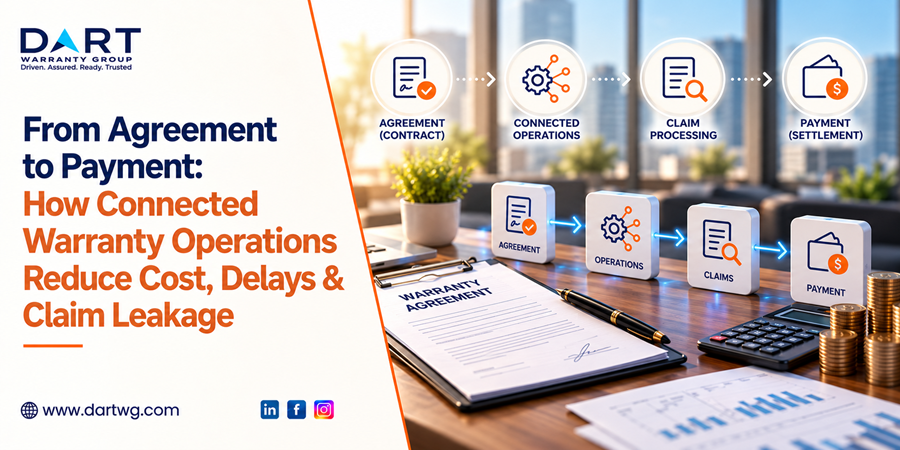
Warranty goes beyond claims. Beginning with the contracts and making sure that the information about coverage is in accordance with the initial agreements, through the repairs and payments – all the steps depend on the data and its processing speed. Disorganized workflows filled with delays, mistakes, and miscommunications are hurting businesses and reducing profits. Linking the crucial parts of the process in one united workflow leads to fewer errors and to providing the needed information in time.
Warranty management software is a business process connectivity solution designed for warranty companies, TPAs (Third-Party Administrators), and auto service providers to combine all the steps of the complicated warranty lifecycle in one place. When choosing whether it is the right solution for the business or not, there are several aspects to consider.
The best solution should satisfy the current business needs, have all the required integrations, APIs, and scalability options, benefit the staff and claimants, provide data security, and allow easy migration if needed.
Why Connected Warranty Operations Matter?
Several warranty management systems deal with agreements, claims, repair orders, dealers, and payments in different applications. Personnel usually need to switch from one application to another for checking information, reconciling data, and solving problems.
Such discrepancies can impact the whole process, as an old agreement will hinder the approval of the claim, whereas discrepancies in invoice information can lead to wrong payments. Reconciliation requires time that can be spent on solving more complex issues or helping the dealers. Moreover, connected processes create a smooth flow of information between departments. It ensures that agreement data, claim data, and payment data always match each other.
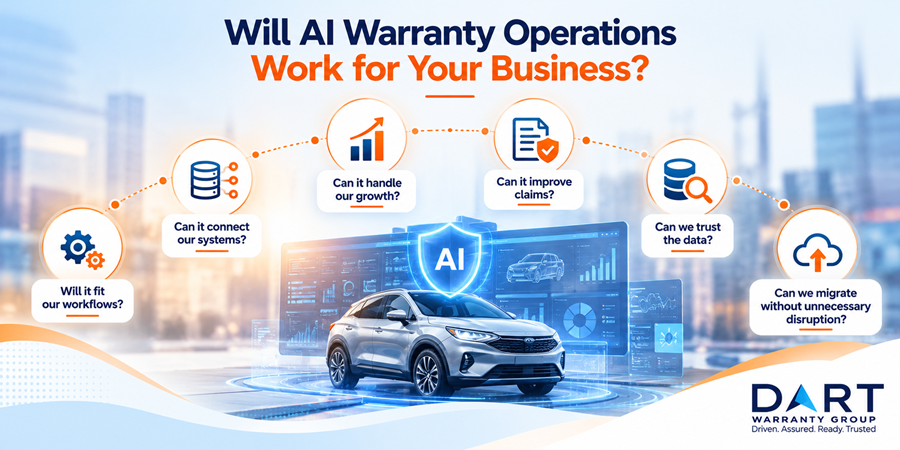
Will It Fit Our Existing Workflows?
Each warranty organization has its unique processes for dealer onboarding, contract management, claims approval, and payments. The platform must support all these processes without requiring teams to design every process from scratch.
Adapting to Business Requirements
An agreement management system in USA needs to cater to agreement creation, renewal, cancellation, coverage policies, and contractual modification while ensuring that the data remains easily available to authorized teams. Besides, companies need to check for the presence of hierarchical approvals, exception handling, and business rules configuration capability in the system. An example would be automatic validation for small claims and manual review for large claims.
Accordingly, this is particularly important for companies with multiple warranty programs where each product will have different coverage limits, different exclusion clauses, different approval criteria, and different document needs. It needs to be possible to configure all these differences without having separate processes for each program.
The idea is to automate the repetitive tasks while preserving the flexibility for non-repetitive tasks.
Can It Connect Our Existing Systems?
Lack of integration between dealer, accounting, and claims software can lead to information gaps, which means that workers have to repeat data entry several times, increasing the potential for mistakes.
Connecting Agreements, Claims, and Payments
An agreement system in USA must share its pertinent data with dealer management systems, customer relationship management tools, accounting systems, and repair order management software. Nevertheless, integration with an API system and proper data synchronization will make it easier for businesses to be sure that their agreement changes are reflected in eligibility determination and the claims handling process. Businesses must also evaluate whether integrations cope with duplicate entries, transaction rejections, new invoices, and agreement status updates.
In addition, the planning of integration will cover aspects of security policy, data ownership issues, synchronization schedule, and error tracking. When transaction processing fails between two systems, an organization must have a method to identify the problem and fix it, instead of waiting for an employee to notice it.
An integration is not just about connecting applications; it is about consistent information handling.
Also Read: The Hidden Cost of Disconnecting Agreements from Claims
Can It Handle Our Growth?
With an increase in the number of dealers, the addition of warranty plans, and an increase in claim processing, the technology has to be ready to handle additional workload.
Planning for Scalability
- The Extended Warranty Software will be required to accommodate more plans, agreements, users, document handling, and transactions in accordance with changing business needs.
- The performance of the system, integration capabilities, reporting functionality, and security measures need to be evaluated prior to implementation. Testing under realistic workload conditions can help identify potential problems which may not arise from demonstrations.
- Scalability means accommodating changes in terms of business locations, regulatory requirements, and operating procedures. Flexibility in software design will enable businesses to add new functionality without overhauling the entire technology infrastructure.
- It is also necessary for businesses to evaluate how reliable and effective vendor support will be, as well as performance improvement processes. Growth should not mean decreased efficiency in handling claims and visibility in terms of payments.
Can It Improve Claims and Reduce Claim Leakage?
Claim leakage results when the payment for the claim surpasses the amount that should be paid based on the coverage and work done. The usual reasons for claim leakage include double claims, false labor costs, invalid coverage, and inconsistency in claims assessment.
Improving Claim Validation
Warranty claim management in USA can only be efficient if there is proper access to the information regarding agreement details, vehicle details, limitations, repair invoices, and claim history. A well-connected system will be able to verify such information, check for missing documents, recognize duplications, and send such exceptions to a relevant reviewer prior to any payments.
Such standardized rules of verification will also contribute to the consistency of claims handling. Reviewers will know what checks have been completed, what information is missing, and what requires additional investigation.
The Role of AI Claims Processing
AI claims processing may prove helpful for invoice extraction, document classification, anomaly detection, and detecting abnormal repair costs. With the help of business rules, AI can be used to make claims reviewers concentrate on the cases requiring further consideration.
AI technology may be especially helpful where claims include a large number of unstructured documents such as invoices, service reports, and relevant agreements. Yet, information extracted must be validated, and unclear information marked as such without being accepted as a fact. Moreover, AI should not substitute for the human supervision that is necessary in some cases. Some high-value claims, fraud, and disputed decisions may require a manual review.
Companies need to evaluate progress using the accuracy of claims, processing time, duplicates, and proven leaks instead of using automation rates only.
Can We Trust the Data?
Connected transactions rely on accurate data. Mismatched agreement dates, variable vehicle identification, and old coverage data could result in claim rejections or inappropriate payments.
AI-Enabled Automotive Warranty Software Built for Modern Businesses
Discover More →Maintaining Data Accuracy and Traceability
Warranty claim management software must have data validation, duplicate detection, role-based security, and audit trail capabilities for key decision-making. The organization needs to determine the owner of important data, the source of each data record, and reconcile the claims with the invoices and payment logs.
Data governance is also needed post-implementation by reviewing recurring mistakes, updating old data records, and defining procedures for managing any changes in dealer contracts or coverage. In case of using AI in decision-making, it is also necessary to review the data and know why this particular case was identified or approved.
Good-quality data is vital for resolving conflicts and investigating discrepancies.
Can We Migrate Without Unnecessary Disruption?
It is hard to migrate from existing systems due to the need to transfer years’ worth of contracts, claims, dealer data, and payment history. Migration done poorly could result in the introduction of gaps in data and duplicated entries.
Preparing for a Smooth Transition
Before the migration, it is necessary to cleanse the existing data, establish system interdependencies, and correlate data records with the new system. It is necessary to validate critical agreements, claim references, payment amounts, and historical documents after migration.
In other words, phased implementation can help decrease risk through the introduction of the system in a selected group of dealerships or warranty programs. It provides an opportunity to discover integration challenges, validate user access, and check claim processing before the system becomes the core of daily operations.
It is important to train employees because claims review specialists, financial departments, dealership specialists, and administrators will be required to perform their functions in the new process. Good communication helps avoid misunderstandings during migration. An effective migration strategy includes data cleansing, integration testing, validation of the records, user training, and a contingency plan for active claims and pending payments.
The task is to enhance business processes without disrupting other business activities.
How Can Businesses Measure the Results?
Integrated warranty systems should provide concrete benefits and not just consolidation of current systems. This can be accomplished by organizations measuring the baseline metrics prior to integration and then comparing the outcome afterwards.
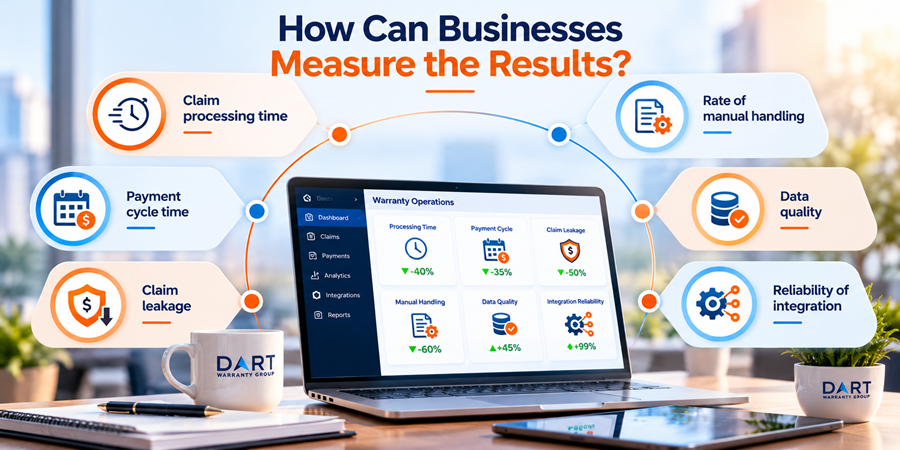
Some of the metrics would be:
- Claim processing time: Time between claim submission and decision.
- Payment cycle time: Time needed to process approved claims.
- Claim leakage: Amount of money that was paid unnecessarily.
- Rate of manual handling: Claims that need repeated human involvement.
- Data quality: Occurrence of missing, duplicated, and conflicting data.
- Reliability of integration: Percentage of successful data exchange.
Companies should also track dealer satisfaction, claim rework, and the number of open exceptions. This gives a wider perspective on the business operations, which will expose areas that processing time alone cannot address.
So, this will allow companies to know what is working and what areas need improvement through automation. Fast processing time is meaningless unless accuracy and results are maintained.
Final Words
Integrated warranty operations can allow organizations to streamline their processes when it comes to agreements, claims, approvals, and payments. If integrated correctly and if the right data is utilized with proper automation, companies can minimize administrative work, avoid unnecessary mistakes, and even expedite payments.
Warranty management software should be the right one; this means it should integrate seamlessly with other applications, support future growth, increase the accuracy of claim validation, and provide a controlled transition. It is very important for warranty providers, TPAs, and automotive service providers to choose such software first of all.
Also Read: The Real Cost of Slow Claims Turnaround Isn’t Just Time. It’s Lost Profit
FAQS
1. What is connected warranty management?
Connected warranty management connects agreement management, dealer management, claims management, repair approvals, and payment processes in integrated systems. It provides better data exchange, automates many processes, and enhances visibility throughout the entire warranty process.
2. How does warranty software prevent claim leakage?
The warranty software can ensure coverage validation, duplicate detection, invoice validation according to the terms of coverage, and detection of suspicious charges.
3. Is warranty software compatible with existing dealer software?
Yes, there is warranty software that allows API and data exchange with dealer management systems, accounting, CRM, and repair software. Compatibility depends on the software that you use and its integration capabilities.
4. How does AI make warranty claims processing better?
AI can retrieve information from documents, find inconsistencies, categorize claims, and flag inconsistencies. Together with business rules and human intervention, it can cut back on redundant tasks and facilitate claim decision-making.
5. How can businesses ensure safe data migration for warranties?
Businesses can minimize risks of data migration by cleansing the data, mapping the records, testing integrations, and validating the data after migration.




Daniel Kozlowski
With over 30 years of experience in the extended warranty and service contract industry, I help businesses modernize warranty operations and optimize claims management processes. As the founder of DRK Resources Tech LLC, I share insights focused on warranty management, service contract solutions, and automotive technology trends.