Daniel Kozlowski
30 Oct 2026
No Comments
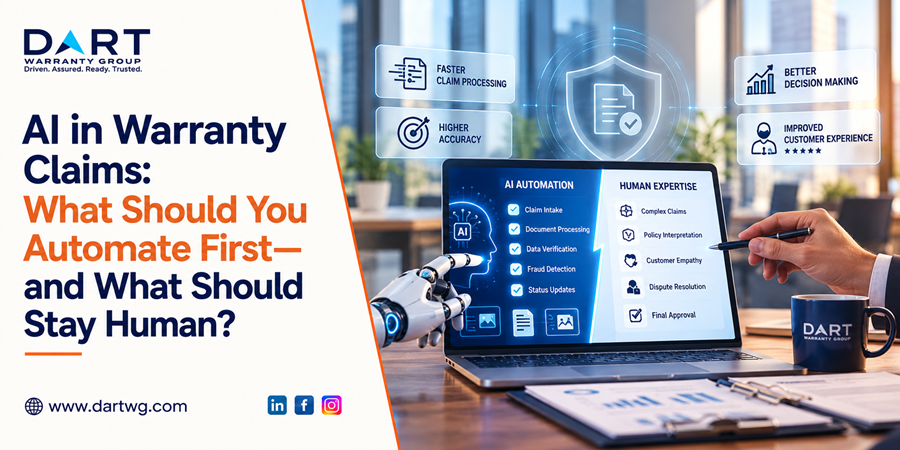
Warranty departments are getting squeezed from all sides. The number of claims keeps rising, customer patience lasts for hours rather than weeks, and fraud is getting ever more complex. The potential for AI in warranty claims s is huge, but so are the dangers of automating the wrong processes. The best departments aren’t debating whether to apply AI. They are trying to figure out where to start and where to leave it to humans.
This blog takes you through the steps one by one: what to automate at the beginning, what to automate next, and what to leave exclusively to people. Let’s take a look:
Why AI in Warranty Claims Is Gaining Momentum
The traditional claims process is built around e-mail exchanges, spreadsheet databases, and multiple rounds of information exchange with dealers, repair shops, and customers. Each exchange creates delays and potential for mistakes. The consequences are inefficient payments, disappointed partners, and an increase in claims volume faster than headcounts.
Besides, AI claims processing makes a difference. Contemporary algorithms can parse documents, verify data, and match a claim against the terms of coverage in just seconds. For manufacturers, dealers, and service agreement providers, it means improved efficiency, decreased cost of handling claims, and valuable insights into quality trends of their products.
But speed is just one side of the equation. With all claims being processed according to the same criteria, results are consistent throughout different regions, dealerships, and adjusters. Consistency helps in audits, decreases disputes, and provides better data for management to estimate reserves and make improvements to their products.
The Cost of Staying Manual
It’s not only the manual process that consumes manpower. Inconsistent decision-making, inability to detect fraud, and inaccurate information that does not allow recognizing the repeating pattern are typical problems. Delayed modernization results in a greater loss of the reputation of an enterprise rather than financial costs.
Where the Market Is Heading
Automation of processes in the United States market has seen increased interest as most manufacturers seek ways of reducing turnaround times and standardizing decision-making processes among dealerships. Automation has become a requirement rather than a differentiator.
A Simple Framework: Automate by Risk and Repetition
Before selecting the tools, group the claim activities into four categories based on two dimensions: the level of repetition involved and the level of judgment required. The category that offers an immediate payoff through automation is that of highly repetitive and low-risk activities.
High Volume, Low Risk: Automate First
Such tasks involve definite guidelines and hardly require interpretation. They provide the quickest payback and increase internal confidence in the technology.
High Judgment, High Impact: Keep Human
These activities have elements of ambiguity or involve relationships and substantial financial risks. The AI can help with data here, but the decision must be made by a human being.
What to Automate First?
Begin with the activity that causes your team to lose productivity without requiring much skill. This will be the easiest place for you to begin automating claims processing.
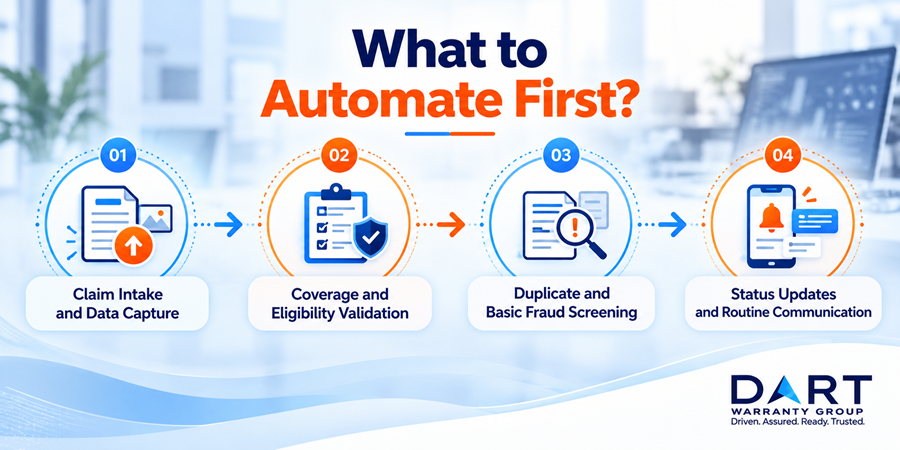
1. Claim Intake and Data Capture
An AI system can identify information on claim forms, invoices, images, and service reports and enter the information automatically into the field. This will prevent re-keying mistakes and speed up the process. This is the best starting point when it comes to AI claims processing because there are clear rules and high volumes.
2. Coverage and Eligibility Validation
The verification of warranty eligibility of the product, its serial number, or service repair would be largely rule-based. Verification by automated means will help check whether the product meets the terms of the warranty immediately.
3. Duplicate and Basic Fraud Screening
Pattern recognition is an ideal application of machine learning. Machine learning algorithms can identify duplicate entries, duplicate serial numbers, abnormal frequency of repairs, or labor costs that do not match the norm. Flagged entries go to the reviewer, while the rest proceed.
4. Status Updates and Routine Communication
People always have questions regarding where their claim is. Automated notifications and self-service portals reduce many of those requests. This is made possible with powerful warranty claim tracking software that gives everyone an all-in-one view of each claim.
One positive aspect of using this solution is that there are fewer routine calls and emails to deal with. The fact is that when dealers can track payments by themselves, you are no longer working as a status hotline, which gives you time for exceptions. Those who use AI claims processing experience that during the first quarter.
What to Automate Next?
After achieving stability in both the intake and validation process, you can expand the automation further to include processes that need some degree of intelligence, but with humans monitoring the process.
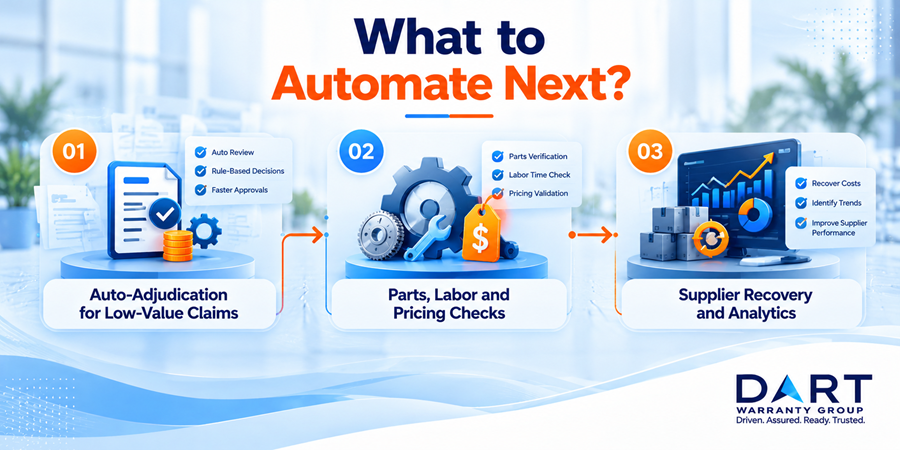
Auto-Adjudication for Low-Value Claims
Use thresholds whereby all simple claims under a certain amount of money are approved automatically if they meet all tests. For the more complicated claims, they go to the human reviewer.
Parts, Labor and Pricing Checks
AI is capable of analyzing and comparing the submitted time and costs for parts used in repair with those on the standard lists for repair time and cost per component. The deviations are raised to be considered.
Supplier Recovery and Analytics
The use of automatic coding to assign fault codes and root causes makes it easier to find cases where claims can be recovered from suppliers. Early identification of defect patterns is also possible. Such functionality comes with mature warranty management software.
What Should Stay Human?
Automation is at its best when people concentrate on the things that cannot be done by machines. Let these things remain in the human domain.
AI-Enabled Automotive Warranty Software Built for Modern Businesses
Discover More →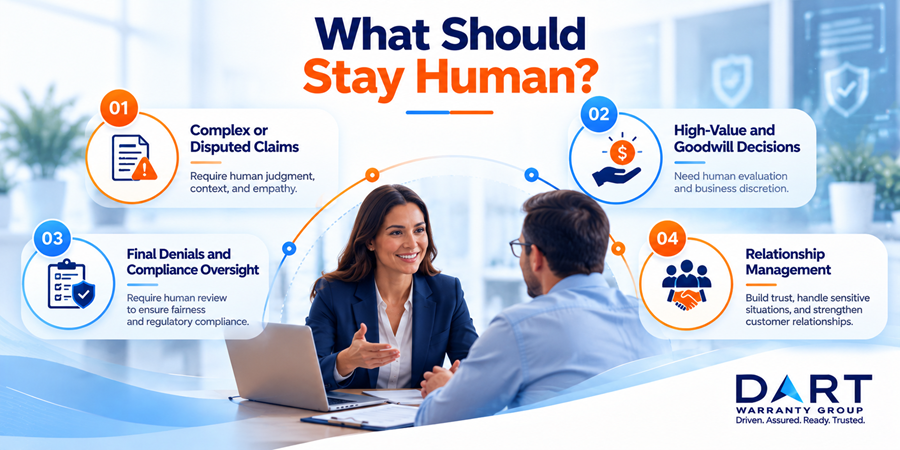
Complex or Disputed Claims
In the case of an ambiguous insurance coverage language, there might be some conflicts of documentation and disputes raised by customers. A human is capable of evaluating some context that a machine would not perceive.
High-Value and Goodwill Decisions
Big bonuses and goodwill exemptions impact brand image and financial exposure. They should be made by experienced people, while AI provides data to support them.
Final Denials and Compliance Oversight
The refutation of a claim will come with repercussions both legally and reputationally. Humans will always review decisions made by AI to ensure fairness, transparency, and compliance with the laws. For the evaluation of warranty claims software in USA, the teams will also have to make sure that there are audit trails, overrides, and explainability in place.
An actionable recommendation is that one allows AI to recommend while humans make the decision. The reviewer needs to be told the reason why the AI marked the claim, what policy section was violated, and what previous claims were alike. This way, accountability is maintained, and any flaws in the machine learning models can be detected earlier.
Relationship Management
Your dealers, service centers, and important clients will appreciate personal interaction when problems occur. It is through automation that you can have your team members devote their time to building such connections.
Also Read: Top 7 Challenges TPAs Face in Warranty Claims Management
How to Roll Out Automation Without Losing Control
This is an incremental approach that mitigates risks and increases trust.
Start Small and Measure
Pilot one of your workflows, like intake or validation, and monitor cycle time, accuracy, and exceptions. The findings will be used to determine next steps.
Keep Humans in the Loop
Ensure that all automation processes have a well-defined chain of escalation procedures in place. The use of confidence scores, review queues, and manual override options allows for intervention.
Maintain Clean Data
Performance of AI is determined by the quality of data that it uses to learn. It is important to standardize failure codes, products, and coverage guidelines prior to deployment.
Governance is important as well. Appoint an owner of rules and thresholds, analyze a sample of claims approved each month automatically, and update models when changes occur in product lines, vendors, or coverage guidelines. An unmonitored system will go out of control, and minor mistakes will accumulate and turn into major problems. Proper reporting in warranty management software will make this task a routine.
Final Words
Automation is not the answer either. The key here is intelligent sequencing: automating the simple, rule-based activities initially, followed by introducing intelligent validation measures and then leaving the more complicated, high-risk tasks for humans to perform. This way, you will be able to reduce cycle times, minimize losses, and free up your people to interact with customers and partners.
Should you be ready to transform your process, our experts at Dart Warranty will assist you in implementing the appropriate warranty management solution.
Also Read: The Hidden Cost of Disconnecting Agreements from Claims
Frequently Asked Questions
Which activities should you first automate for your warranty claims?
Automate intake and claims data extraction and verification because they have high transaction volumes, are rule-based, and low risk; therefore, they offer quick wins in efficiency and quality without eliminating human decision-making.
What does AI claims processing achieve in terms of cost reductions for your warranty business?
AI claims processing decreases manual data input, review periods, finds duplicates and potential fraud, and reduces payout errors. Reductions in processing time and mistakes result in direct cost savings.
Could AI decide on approval or denial of your warranty claims?
AI can safely automate low-value and fully verified claims according to the predetermined rules, but denial, dispute cases, and higher-value claims will require human review.
What functionality should warranty management software have?
Consider automatic intake, validation based on rules, fraud detection, process routing, dealer portals, customer portals, reporting, audit trail, integration with ERP systems and service management systems. Automated warranty claims tracking software functions provide up-to-date visibility into the status of claims to all stakeholders involved.
Is claims automation for the USA regulated?
Yes. Claims handling activities related to warranty services in the United States may be regulated by federal and state legislation concerning claims handling and consumer protection. Consider the use of software products capable of keeping full documentation, making explainable decisions, and giving humans control over decisions. Consult a lawyer in your particular case.
Leave a Reply
Recent Posts





Daniel Kozlowski
With over 30 years of experience in the extended warranty and service contract industry, I help businesses modernize warranty operations and optimize claims management processes. As the founder of DRK Resources Tech LLC, I share insights focused on warranty management, service contract solutions, and automotive technology trends.